Picket five of six
What You Set Out the Night Before
The morning one neighbor admires is assembled, it turns out, at about half past nine the previous evening.
Left on the rail by the shed side
You were right about Friday. Quarter past midnight, and for nothing: I was in the garage rearranging jars of screws I will never use. I have decided to stop being surprised when you are right. It was taking up too much of my week.
So I have been paying attention to my evenings, and I do not much like what I see. I come in, I eat, I sit down in front of the television with the phone in my other hand, and three hours evaporate. Then round eleven I get a second wind out of nowhere and go and do something pointless with great energy. Then I cannot sleep. Then the alarm.
Your house does something different. I can see it from the back bedroom. Half past nine or so, the big light in your front room goes off and one small lamp comes on. By ten the place is dark. I used to think that was a bit sad, if I am honest. Now I am starting to suspect it is the reason you are upright at dawn looking pleased with yourself.
What happens in there between the lamp and lights out? I am asking as a man who would like his mornings to stop depending on luck.
The yard with the shed
Sent back from the pear-tree side
Nothing happens in there. That is the trick, and it took me until fifty to find it.
I will tell you how I think of it. The morning is a job, and like any job it goes better if the tools are laid out before you start. Nobody turns up on site at seven and only then goes hunting for the level. So at about half past nine I do what I call closing the yard, which is a grand name for ten minutes of small moves.
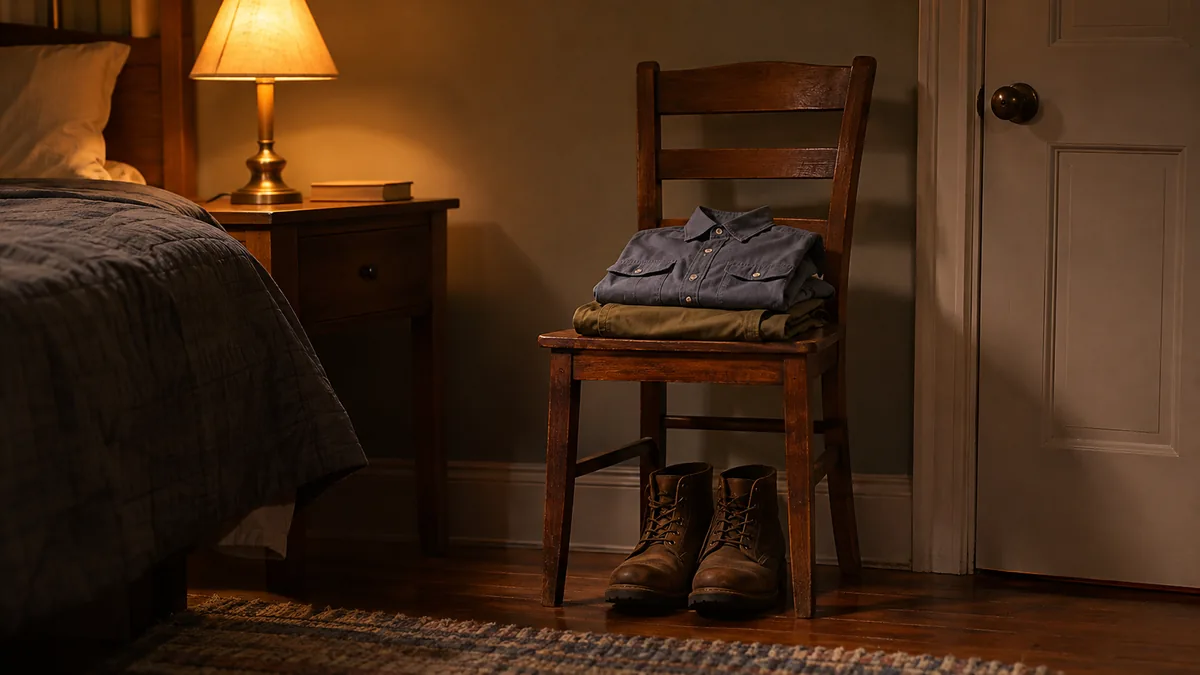
Clothes for tomorrow go over the chair by the bedroom door, down to the socks. Boots under it. Keys and wallet in the dish, the same dish, every night, so there is no search party at six. I look at tomorrow once, on paper, and write down the first real thing I have to do, just the one. Then the paper stays in the hall and the worry stays with it.
After that the house winds down in a fixed order. Big lights off, one lamp on. The television goes off at the end of whatever is on it, not three programmes later. The phone goes to the dresser, face down, and it is finished for the day. I read something on paper, far from anything to do with the job, until the lines start to swim, which rarely takes long.
About that second wind at eleven. I used to get it too, and I used to obey it. I now believe it is mostly bright rooms and bright screens telling a tired body it is still afternoon. Since I started dimming the place at half nine, it hardly ever turns up, and when it does I let it pass like a bus I am not catching.
You will find it dull for a week. Then one morning you will be dressed and on the step before you have had to make a single decision, and you will come and lean on my fence to tell me about it.
The yard with the pear tree
Previous picket: The two o'clock lean Next picket: Saturday is not a job